
No one likes passages. Okay, maybe some people do but most people don’t. Leading up to this trip, I didn’t realize this.

We spent a lot of time preparing for this trip. We worked on the boat. We upped our sailing and navigation skills. We read many books and websites of those that have done passages. We joined the Bluewater Cruising Association and attended talks by experienced cruisers. Through all of this, I didn’t realize that people don’t like passages. Passages are hard. They are not enjoyable. We try to make them comfortable and therefore, enjoyable but they are not. Passages are endured, not enjoyed.
The first time I realized this was during a conversation with our friends Greg and Lori from SV Palomita. We were in Mexico. We were talking about our trip south from Canada to Mexico–the rough weather, Sharlene’s seasickness. We talked about how we couldn’t get the boat settled so the passage was enjoyable or fun. Greg looked at us and said, “Nobody likes passages.”
At the time, I didn’t fully agree with him but I do now. Since then, we’ve spoken to many sailors and almost all of them will admit that they don’t like making passages. Passages are endured so one can get to somewhere enjoyable. The funny thing is that the struggles of a passage are soon forgotten once one gets to a new place. Our recent passage from Tonga to New Zealand is a good case in point.
The passage from Tonga to New Zealand has a fierce reputation among cruisers. It’s a difficult one. Low-pressure systems roll up from the Southern Ocean packing high winds, rain and waves. For weeks, even months, before making the trip we read articles and sailors’ accounts of the trip. We studied strategies for the best way to make the trip. It worked.

We had a good passage. It wasn’t an easy passage but for this trip, it was good. The best we could have planned for. We had a little of everything. We started with moderately strong winds and lumpy seas for the first day or two. The wind built from there and so did the seas. On the third day we were seeing winds near 30 kts and three-to-four-meter seas. The wind was forward of the beam which meant that waves hit the bow sending water crashing over the decks. We were wet most of the trip. Several waves hit our dodger eventually causing some of the screws that anchor it to the deck to pull out. We jammed a rag into the gap to keep things as dry as possible. Still, water found its way into the cockpit. One had to choose one’s seat in the cockpit carefully in order to stay dry–relatively dry.
The thing is, Cambria took it like a champ. The sails were reefed down and it held its course steadily taking us to New Zealand. For all but a short very gusty period, our windvane steered us remarkably well towards our destination. We were safe and as comfortable as possible under the conditions but it wasn’t fun. It wasn’t enjoyable.
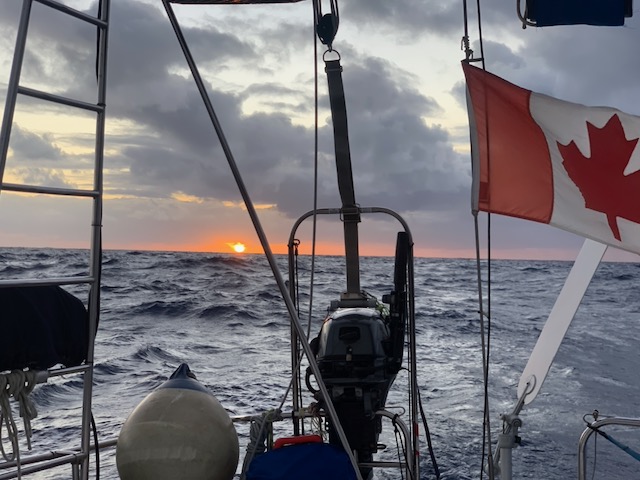
Down below we wedged ourselves into corners in order to stay upright. Still, it wasn’t possible to relax. Just sitting upright was a constant ab workout.
When on watch, I spent much of my time standing on the cockpit stairs where I could see out, hang on and stay dry. Moving around the cabin we had to make sure we had a good grip with both hands so that we weren’t thrown from one side of the cabin to the other. Even so, we had bruises from being slammed into things after the boat made an unexpected lurch.
On the second day of the passage I commented to Sharlene that we were doing well. Sure, it was rough but Cambria was handling it well. It wasn’t a fair comment to make to someone that is always on the verge of seasickness. She didn’t say much when I made the comment. Later that day or perhaps it was the next day she told me that she was okay if we didn’t see Fiji.
Before arriving in Tonga, we thought we’d go to Fiji after visiting Tonga but later we changed our minds. We decided not to rush our time in Tonga. We’d enjoy more time there and save Fiji for next cruising season.
Fiji is a popular holiday destination for Australians and New Zealanders. It’s a relatively short flight for them but for us, it’s a long way from Canada. If we don’t visit Fiji on Cambria, we likely won’t ever visit Fiji. Sharlene knew this when she made her comment. Obviously, she wasn’t having fun.
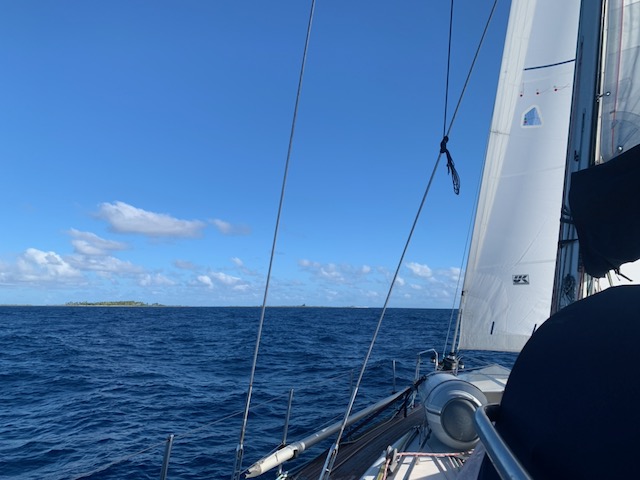
On the fifth day of our passage the winds died. In fact, we motored or motor sailed for the better part of a day. As the winds built again, we used our code-0 and full main so we could ghost along. The sun was out. The seas were calm. It was gorgeous.
The rest of the passage wasn’t without its challenges (more on this in another post) but it was nothing like the first few days. We arrived in New Zealand after six days from when we set off. We were tired and had a few bruises but we were fine.
Less than a week after arriving I overheard Sharlene and another cruiser talking about the future. They were talking about sailing to Australia and later, on to Indonesia. Sharlene wasn’t just listening to the other cruiser’s plans. She was discussing it as a possibility for us. I don’t think we’ll sail to Indonesia but it looks like we will be seeing Fiji. It’s funny how fast some memories can fade.
 Cormacks On Cambria
Nicely put! Passages are the cost of finding paradise!
LikeLike
Well said!
LikeLike
Interesting. Thanks for the thoughts.
It is true, many days on the boat are work, a few are fun, then are the stupendous gorgeous days.
Kenn
LikeLiked by 1 person