This post is more for our cruising friends that may be heading to New Zealand in the future. If you’re not a cruiser don’t feel you have to read it. You won’t hurt my feelings if you skip this one. 🙂
New Zealand is very protective of its waters. They guard against any unwanted sea life being brought to the country or moved around the country. This protection starts when one first arrives–actually before one arrives.
Upon arrival one must clear in with a Biosecurity officer. One must prove that the boat has been cleaned within one month of arriving in the country. This proof can be receipts showing that the boat was cleaned or photos and videos showing a clean bottom. Most cruisers we know scrub the bottom of their boat a few days before departing for New Zealand. That’s what we did. When we cleared into the country, we pulled up the photos and videos on our MacBook to show the Biosecurity officer. She was satisfied with what she saw.
The concern with invasive species does not stop once one enters the country. New Zealand takes steps to stop the spread of invasive species within its borders. This summer season they are trying to stop the spread of non-native caulerpa–a type of seaweed. Once it establishes itself, it takes over the seabed with devastating effects for the native marine life. Many popular anchorages have been closed to boaters this season to stop the spread of the seaweed.
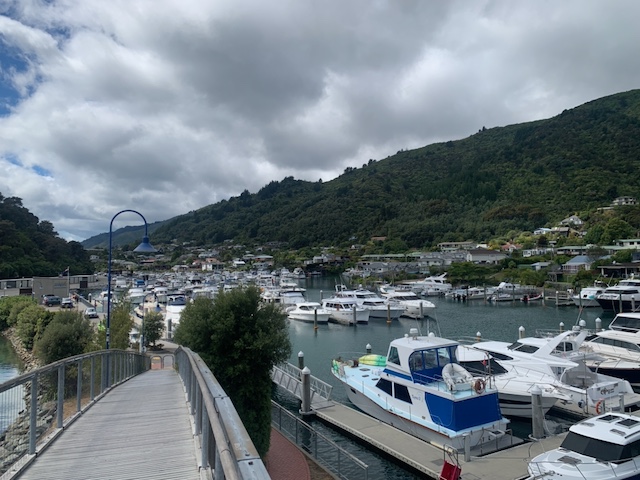
The Mediterranean Fanworm is another invasive species that New Zealand is trying to control. Because of this, marinas work to ensure that boats at their docks do not carry or spread it. To this end their policies are that all boats coming to the marina must be power washed within one month of arrival or anti-fouled within six months. I’m not sure what this looks like for cruisers here. I have asked some cruisers and have had mixed responses.
A couple of people have told me that yes, they anti-foul their boat every six months. Another cruiser is an avid scuba diver and said he scrubs the bottom of his boat regularly and that is enough for his marina. He also said that in the area in which he cruises the marinas are less stringent on the enforcement of the policy. Another sailor told me that he doesn’t stay in marinas other than his home marina. He anti-fouls his boat every two years but hauls and power washes his boat on the odd years. That meets his home marina’s requirements.
For us, we have had two marinas ask for receipts showing that we meet their policy. We didn’t have the receipts, so we were not able to book either marina. Two other marinas let us in and didn’t ask for receipts. The first marina was just after we arrived, so I assume we were permitted in because we had just been cleared by a Biosecurity officer. The other marina didn’t ask but we were booked in by a rigger so we could get our rig repaired. Perhaps they make exceptions for boats needing repairs.
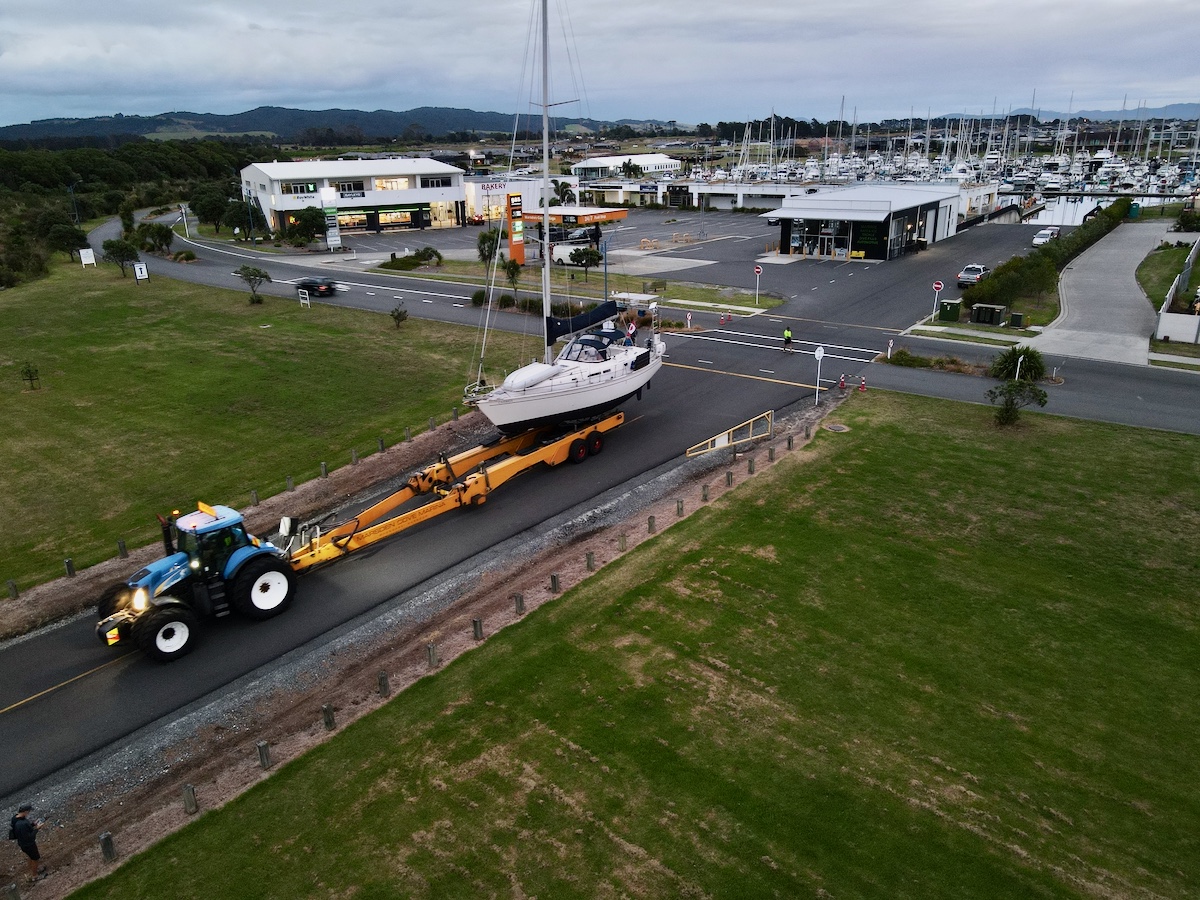
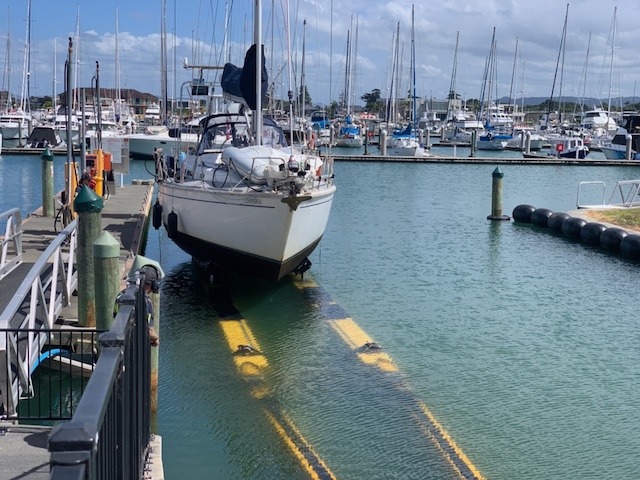
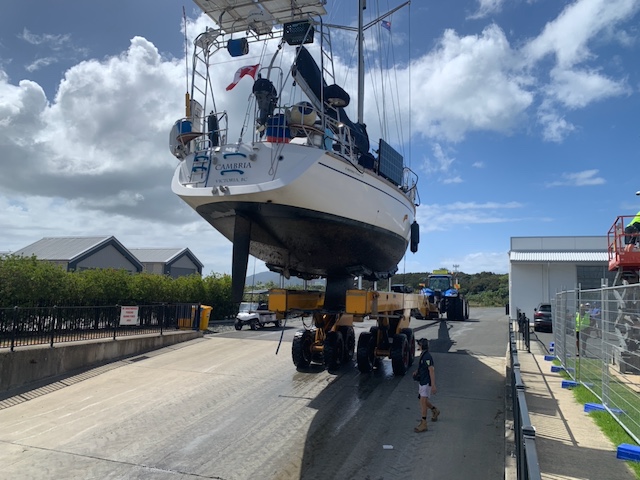
We decided to haul out and anti-foul our hull. We don’t stay in marinas very often and likely will only use them once or twice between now and when we leave so that’s not the main reason we hauled out. The main reason is because our bottom paint wasn’t holding up well. The growth has been unreal here. We’re hoping some fresh bottom paint will help keep the growth at bay. Time will tell, I guess.
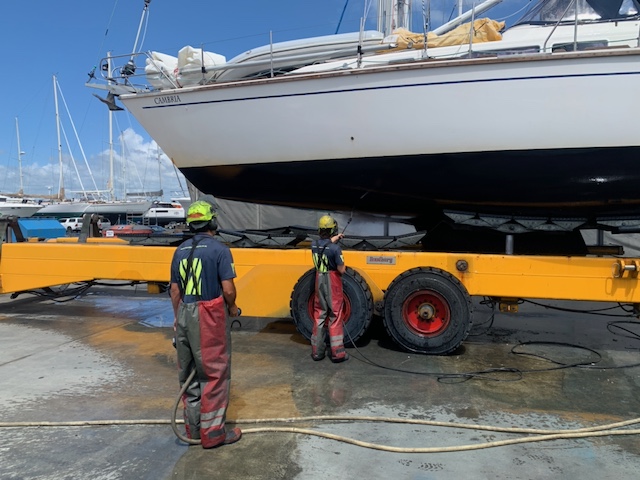
 Cormacks On Cambria
Looks like you are keeping very busy which I am convinced that boats are purposely designed to require infinite care. Enjoy your blogs very much, It is almost like being right there, Bill M
LikeLike
Thanks, Bill and yes, they do need infinite care. As I write, I’m looking across the marina at a boat that belongs to some friends from Salt Spring Island. Last night we had dinner with them and some friends from another boat. We were discussing all the things we needed to do to be ready to head north in a couple of months. After the conversation, I feel pretty good about the length of our to-do list 🙂
LikeLike