One of the first things people ask us when we talk about our trip is, “What happens at night?”
I say, “We sail.”
They are often a bit surprised to hear we don’t stop. But the thing is, there’s nowhere to stop when doing an offshore passage. So we just keep going. We may slow down or sail more conservatively but we don’t stop.
The next question is, “How does that work?”
To which I answer, “One of us has to be awake at all times. We take turns taking care of the boat. Sailors call it keeping watch.”
The person on watch is responsible for making sure the boat doesn’t hit anything and for keeping the boat going in the right direction. This is known as keeping the boat on course. It’s kind of important.
But it’s not like driving a car. A boat is slower so it’s easier to control and there aren’t as many things to hit. The other main difference is that the person on watch doesn’t have to steer the whole time. They don’t have to constantly hang on to the steering wheel. They can move around, quickly grab something to eat or make a coffee. We can do this safely because Cambria can steer herself.
This is good because I don’t like to hand steer. I find it tedious. I like being on watch but I don’t like being chained to the steering wheel for hours on end. It’s boring. I get restless. I like to move around.
There are two main ways that boats can be automatically steered. One is the autopilot. An autopilot is an electric motor that’s attached to the boat’s steering system. The electric motor is powered by the boat’s batteries. We can put the compass course into the autopilot and it will take us where we need to go. We have an autopilot on Cambria. It’s great. It works. It’s simple to use. It’s reliable. It gets us from point A to point B. So far, that’s what we’ve been using to navigate.
The problem with electric motors is that they sometimes break down and they use a fair bit of electricity. We have lots of batteries on board but we still have to charge them. I always feel that I’m a slave to electricity–constantly wondering if we have enough? I don’t like that. I’d rather not have to use electricity for our autopilot if I don’t have to. That’s where windvanes come in. Windvanes are the second way that boats can steer themselves.
Windvanes fit on the back of a boat and use the power of the wind and the water to steer. Windvanes don’t need electricity or motors. As long as there is wind and the boat is moving, the windvane will keep it on course.
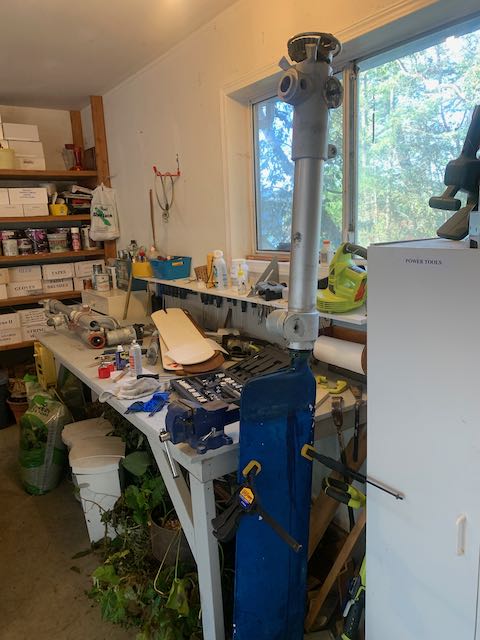
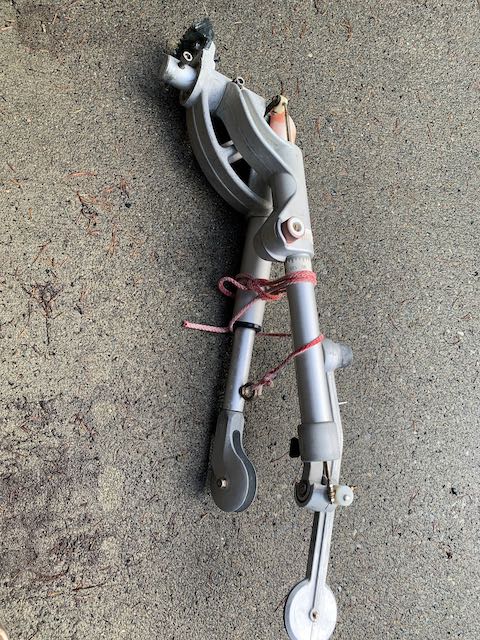

Cambria has a windvane. We haven’t used it yet because it wasn’t on the boat when we bought it. The previous owner had it in storage and we put it in storage too. We’re now getting it ready to use. We have been pulling parts out of our storage unit and digging in cupboards on board to assemble all the necessary pieces. We want to have it ready for when we go offshore.
Our windvane is made in Germany by a company called Windpilot. I went to their website hoping to find a diagram showing the parts I will need. I couldn’t find one so I sent them an email. To my surprise, a few hours later I received a reply from the owner, founder and main designer at Windpilot. He congratulated me on our boat purchase, sent me some helpful links on their site and suggested I send him photos of the windvane so he can help as we put the windvane together.
As far as I know, our windvane was purchased over 20 years ago yet, Windpilot’s owner replied almost immediately to my email in support of their product. That’s impressive!
I’ll let you know how it goes.
 Cormacks On Cambria
Hi, Rob and Sharlene! Greeting from Beijing, China! Merry Christmas and happy holidays!
How to avoid the fear of darkness in the night when one of you keep watching the Cambria?!
LikeLike
Yes, one doesn’t want to be afraid of the dark. I guess we’ll find out if we are soon enough!
LikeLike