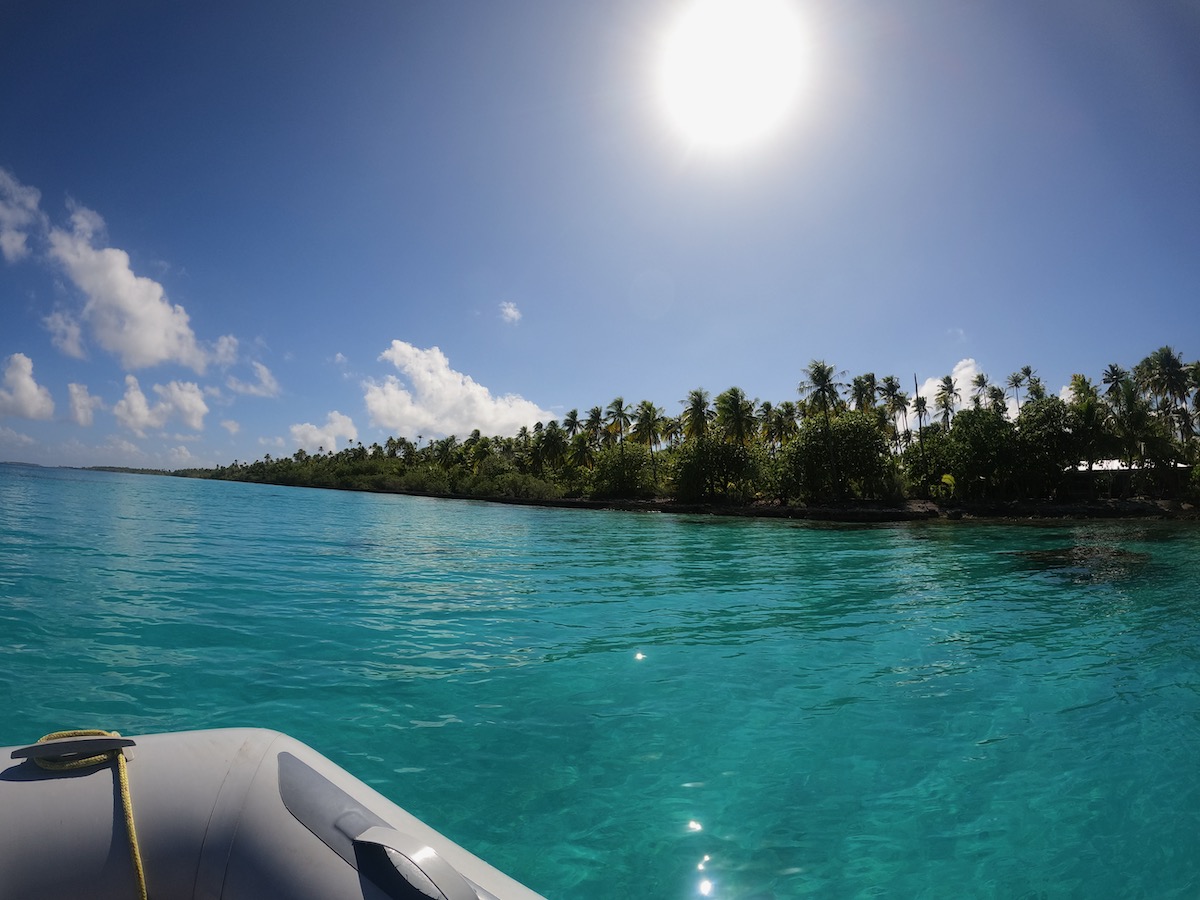
South Pass, Fakarava Atoll
Passes in reefs are how we get in or out of an atoll. They are just breaks in the outer reef that are wide and deep enough for boats to slip through. Some are quite large, others are not. I have mentioned before that they can have strong currents running through them. Depending on the state of the tide, water will be rushing in or out of an atoll. The currents need to be timed well in order for us to safely navigate through a pass. Those same currents make for great snorkelling or scuba diving. The currents bring nutrients in and out of the atoll. With the nutrients come fish of many types and sizes. This includes sharks.
The South Pass at Fakarava is known for its world class diving and snorkelling. We wanted to make sure we snorkelled it ourselves. Unfortunately, the weather did not cooperate.
The whole time we were at the SE end of Fakarava strong winds blew from the east. The anchorage nearest the South Pass didn’t offer good protection from easterly winds so we anchored at Hirifa and waited. Each day we’d check the weather forecast but while we were there it was never favourable. It looked like we’d have to wait a week or more for the winds to swing around to the SE. Unfortunately, we do not have unlimited time in French Polynesia. We have a little over a month left on our visas and many miles still to sail. I wish we could have waited but it wasn’t an option.
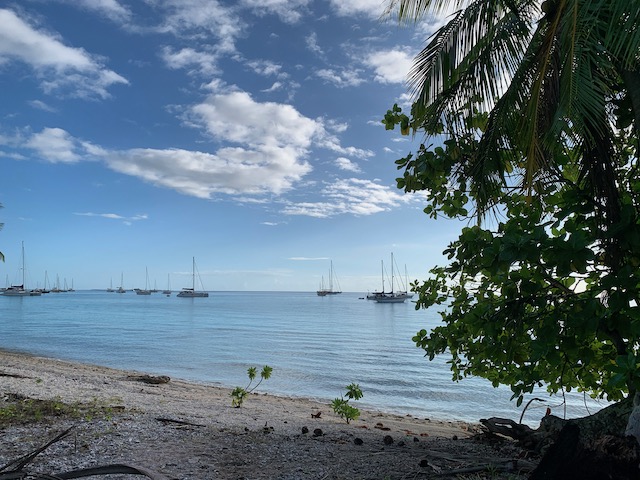
We began to wonder if we’d be able to snorkel the pass. We spoke to the folks on the boat beside us. They had spent a week anchored by the South Pass and dived several times a day. They showed us video they’d shot on their dives. It looked amazing. We had to snorkel it.
One afternoon we made a last minute decision to just go for it. Our friends on SV Renard joined us. We pulled the anchor and sailed the 6 nm (11 km) to the pass. We dropped the anchor, jumped in our dinghies and bounced our way through the other anchored boats to the pass. We had arrived just after slack tide. It had now turned so the current would carry us into the lagoon. We cut the engine near the outer opening of the pass, donned our masks and fins and jumped in. I held on to the dinghy’s painter while Sharlene held on to a floating line I had attached to the back of the dinghy. With a few kicks we began to float through the pass. We steered ourselves over to the eastern edge of the pass so we could easily see the coral wall.
There were countless small fish peeking out from spaces in the coral–always ready to dart back into their hole if we moved too fast or came too close. Larger fish including grouper swam along the edge of the coral. The grouper were not as inclined to dart into a hole as we approached. They appeared to be trying to out stare us as we approached. Periodically a shark or a pair of sharks would appear from the deeper water and cruise over the reef. They showed no interest in us. In fact, they didn’t appear to show interest in anything. They cruised leisurely past all the fish.
We continued on and drifted off the reef into deeper water where we came upon a large group of sharks–a wall of sharks. They were well below us, hovering in place. I tried to count how many there were but lost track at 25. We glided above them. They paid no attention to us. We didn’t see them pay attention to anything. I understand that sharks feed mainly at night. Perhaps they were content to wait for nightfall. I don’t know. We moved on.
We drifted passed huge clouds of fish eventually coming across another wall of sharks. Again, I tried to count them and again, I lost track around 25. We glided past with the sharks paying us no heed.
Soon we were at the inside edge of the pass and in the turbulent water kicked up by the strong winds running counter to the currents. We climbed into the dinghy. We wished we could have done it again but we were out of time. We needed to get back to the anchorage at Hirifa before dark. We zoomed back to Cambria, tied the dinghies on, had the anchor up and were underway as quickly as possible. Unfortunately, the wind was dead on the nose so we motored the return trip. We arrived well after sunset and dropped the anchor in the fading light. Normally we don’t like to arrive in an anchorage with so little light but this time it was worth it. We were all super jazzed that we’d made the trip. It was one of the most amazing snorkel trips we have ever done.
 Cormacks On Cambria
Wowzers!! I am not so sure I would fell very comfortable in that situation !!
LikeLike
People told us what we’d see so it helped prepare us. If we had just come across them, I might have jumped in the dinghy 👍
LikeLike
Amazing adventure! A true south seas experience!!!
LikeLiked by 1 person
Amazing! Your descriptions are like reading a novel! SO glad you were able to snorkel in this magical place! The kids are all at the Calgary Stampede this weekend! 🤠🤠
LikeLike
Thanks and yes we feel very fortunate to be able to do this.
I heard they were going to Stampede, fun!
LikeLike
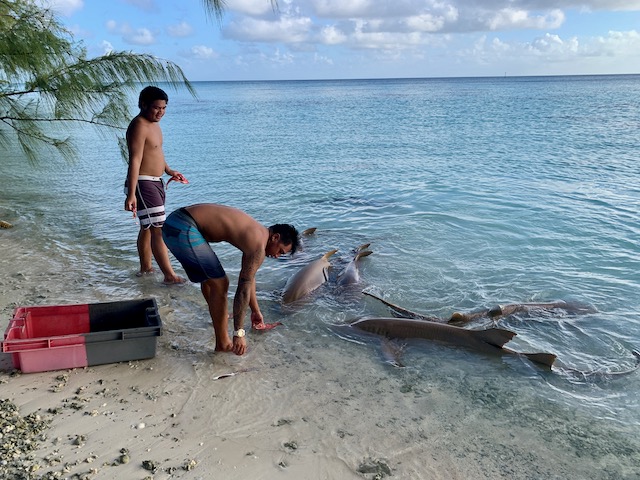
A great photo of them! 💕💕
>
LikeLike
I guess there is safety in numbers. Not shark numbers but people numbers. There were so many people snorkelling every day and telling us they were very docile and not interested in them. When in Rome…
LikeLike
What amazing experiences you’re having. You must have great confidence in our outboard in those currents. I have a 6hp Yamaha, 4st, which I’m finding iffy. Are you still using iridium go or have you upgraded. I find the baud speed is very slow, how about you? We are continuing to prep for SF with a planned Aug 15th departure. Off to Vancouver rowing club on Monday for some fun and an urban fix. A urban fix (what’s that you say) haha.
LikeLike
Yes, the outboard is pretty reliable. It was one of the things we replaced before leaving Canada.
We are still using the iridium go but it is frustrating to use. Many boats have Starlink. We may switch. We haven’t decided yet.
Excited for your departure. Not far away!
LikeLike
Wow…amazing!!
LikeLike
You folks are having so much fun. Enjoy it to the limit
LikeLiked by 1 person