
After a short stop at Yadua Island we decided to join our friends on Renard and sail up the west and north side of Vanua Levu. It looked like a good place to shelter from the strong SE winds forecasted for the next week.
We took a slightly different route from Yadua to cross back over to Vanua Levu. This meant going back across Vanua Levu’s reef at a slightly different place than our previous crossing. This kept us in shoal waters for much longer than before. Additionally, we were hard on the wind so between that and the shallow lumpy seas we had several hours with lots of water coming across the decks. Thankfully, once across the shoals, we could ease the sheets and turn more downwind. The rest of the day was spent navigating between the many reefs and islands along Vanua Levu’s north shore.
The north coast does not see many tourists. There are small villages dotted along the coast and there are a few communities on some of the small islands but we didn’t see any large towns. Much of the shoreline is covered in mangroves and several large rivers flow into the sea making the nearby water turbid. There are many places to anchor but not many places that we could easily get ashore to stretch our legs.
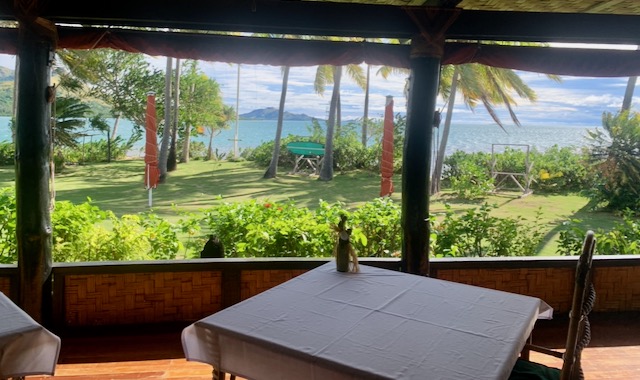
Nukubati was a welcome surprise. Most of the island is devoted to a small, picturesque resort. The resort caters to scuba divers or anyone wanting a quiet getaway. The staff could not have been more friendly and welcoming. Joseph, one of the staff, waved to us as we approached the beach in our dinghies and pointed to the best place for us to land. He then helped us pull our dinghies safely up the beach. We asked if it was okay that we come ashore. He responded, “Of course! Please come.” We followed him up to a large open-air pavilion which consisted of a several dining tables, several spaces with comfortable chairs and sofas, a library nook and a bar. We were greeted warmly by several members of the staff. Sarah at the bar introduced us to Api who offered to give us a tour of the island which of course we accepted. Much of the shoreline is covered in mangroves so can only be accessed at mid to low tide. As we walked, Api told us about the various flora and fauna and which plants are used as medicine by the Fijians.
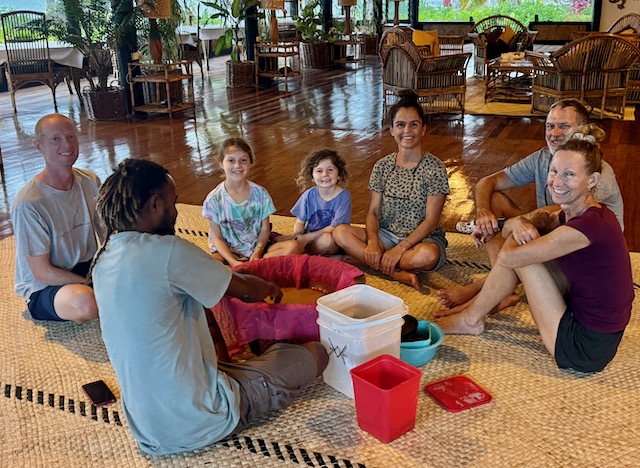
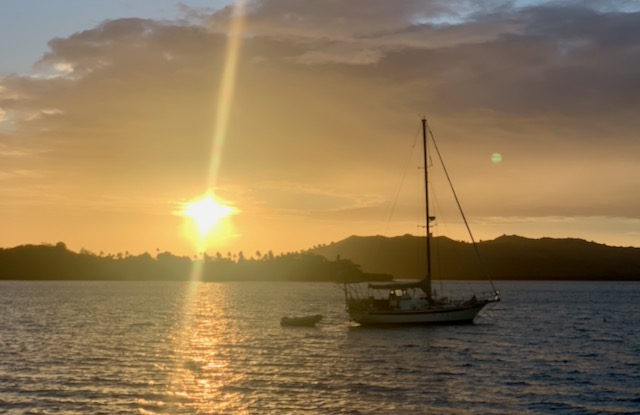
Once back at the main pavilion we enjoyed some cold drinks as we soaked in the stunning views. As the sun set, Joseph invited us to join him and some of the staff for a Sevusevu ceremony and drink Kava. He instructed us in the correct protocols to follow when drinking the crushed root.
Before we knew it, the sun was down and the wind was up. We had left the boat several hours before and I hadn’t put the anchor light on because it hadn’t occurred to me that we would be gone so long. Joseph, Api and Sarah all came down to the shore to help us launch the dinghies and we set off in the lumpy seas in the direction of our anchored boats. We soon lost sight of Renard’s dinghy in the darkness but thankfully we both made it back to the safety of our boats without incident. The next time we saw Api, he told me that he had watched us from the beach to make sure we got home safely. He said he couldn’t see our dinghies but he waited until he saw lights on both boats before leaving the beach.
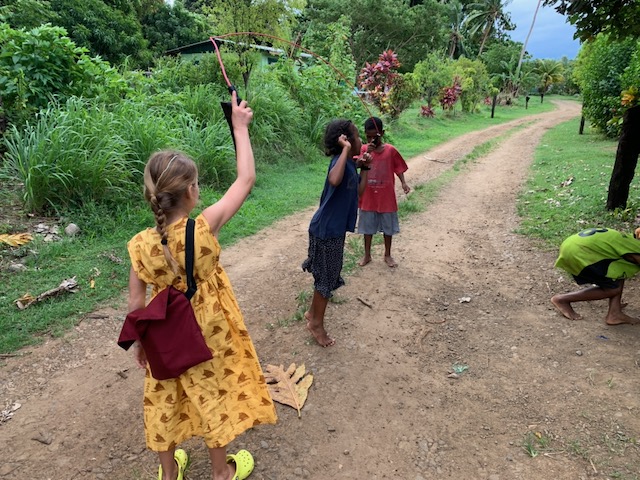
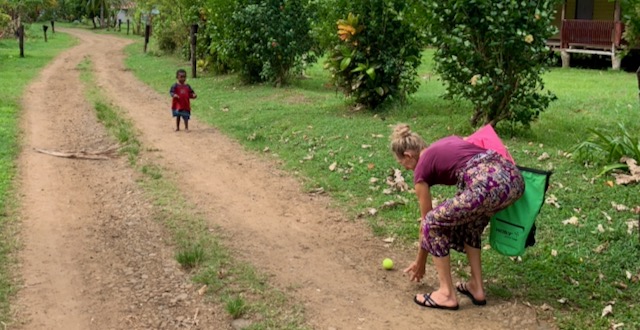
School was done for the day so children were out playing. Marbles was the game of choice and the kids were really good. Two older girls were very accurate and were definitely the village champs. The Renard crew joined in but they were no match for the seasoned pros. Sharlene had a long skipping rope with her which she shared with the kids. One girl knew how to skip but it was new for the rest of them. We all had a great time watching Charlotte show them the ropes and yes, we left the skipping rope with them when we left.
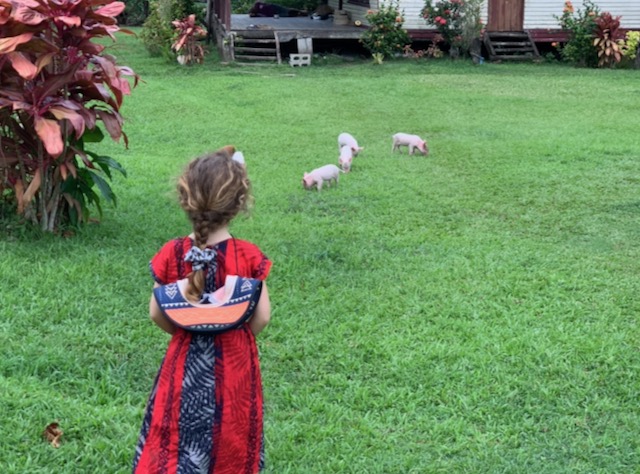
The next day we visited the nearby village on the mainland. The chief was not there so we completed a Sevusevu ceremony with the chief’s oldest son. He welcomed us to the village and asked his younger brother, Joe, to give us a tour of the community. We had a very enjoyable walk. They are largely self-sufficient. They grow their own fruits and vegetables, raise chickens and pigs and of course fish. For cash, Joe has a small farm on the other side of the nearby mountain where he grows kava. He has a small camp there so he can go for a week at a time when he has to tend to his crop.
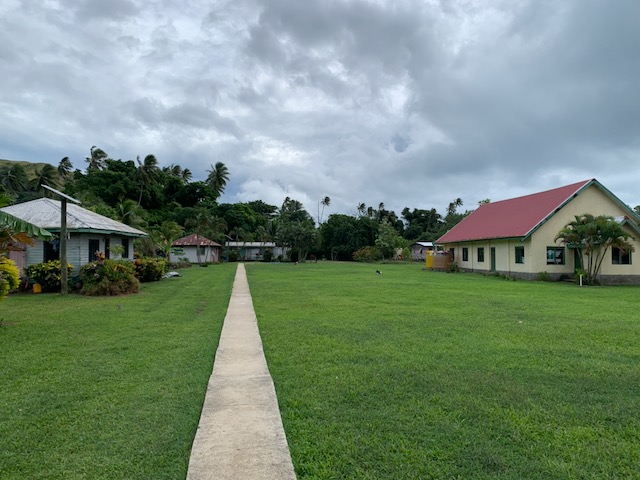


Nearby is the community primary school. It draws students from three villages. Joe took us up to the school for a quick look and introduced us to one of the teachers. The school had several classroom and administrative buildings. Behind them were houses for the teachers. The teachers are not local. The teacher we spoke with was from a village about a half hour drive away. The classrooms looked like traditional classrooms anywhere, desks in rows facing a blackboard and notebooks stacked on the teacher’s desk. One not-so-traditional feature was a large satellite dish in the schoolyard. It is the school’s internet connection. Joe told us that in the evenings people will sometimes sit in the schoolyard with their phones so they can use the internet connection.
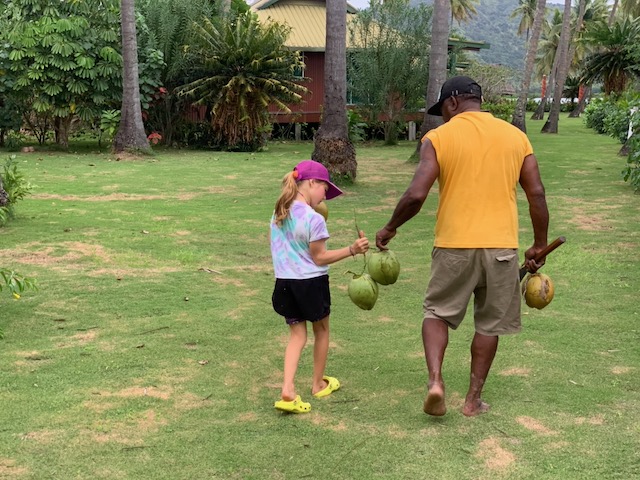
By the next day the worst of the winds had passed so he headed back to Nukubati Island. They didn’t have any guests so the resort was closed. Many of the staff had gone home for a few days until the next guests arrived but we found Api (or he found us). We helped clean up some of the branches that had fallen during the storm. It didn’t take long and soon Api climbed up several coconut trees and we were enjoying fresh coconut water. Also, he showed us how to scrape the meat out of the coconut to make coconut oil and coconut milk. It was a pretty idyllic day.

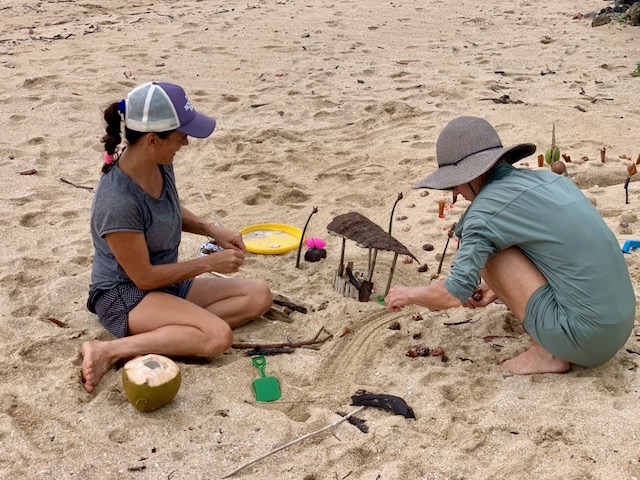
Our experience at Nukubati Island was one of the best we’ve had on our trip. It was the people that made it so. Their warmth and generosity were amazing. The only downside to our time there was that at the end, we said goodbye to our friends on Renard. They continued east across the north side of Vanua Levu while we turned west to retrace our route and then cross over to Viti Levu in preparation for leaving the boat while we fly back to Canada.
 Cormacks On Cambria
Wow, it sounds incredible. Going with the flow and taking time seems to be the key to exploring and getting to experience local life.
How long will you be away from your boat? I wonder if you will have culture shock with the role of putting on proper clothes each day, and so many people etc???
LikeLike
Yes. It was hard to know what to pack for Canada. We will be here for 6 weeks and then return to Fiji. Take care.
LikeLike
Hey Rob and Char, you know we lived on Fiji for over two years? Did you come across the piece of our heart that we left there? Loved reading about your experience, so glad to hear that the Fijians we knew and loved are still being their special selves in that piece of paradise. Barbara and Denis
LikeLike
Hi. Glad to hear from you guys. Still sculpting and involved with dogs? We are home for our daughter’s wedding at the moment. Nice to hear from you.
LikeLike